
Vietnam women's volleyball: the blind spot between two blocks
Câu trả lời cốt lõi: Bóng chuyền nữ Việt Nam tiến bộ nhờ đội hình nòng cốt ổn định, nhưng trần thành tích được đặt bởi hệ thống chứ không bởi cá nhân — cụ thể là tỉ lệ đỡ phát đạt chuẩn, tỉ lệ tấn công từ giữa lưới trong các pha chuyển đổi, và chất lượng các pha bóng ngoài hệ thống. Dữ kiện chính: - Trần Thị Thanh Thúy giữ vị trí chủ công, Nguyễn Thị Bích Tuyền ở vị trí đối chuyền trong đội hình nòng cốt. - Nguyễn Khánh Đang đảm nhiệm libero; Đoàn Thị Xuân và Võ Thị Kim Thoa chia nhau vị trí chuyền hai. - Đội tuyển dự Volleyball Nations League lần đầu tiên trong lịch sử, dưới thời huấn luyện viên trưởng Nguyễn Tuấn Kiệt. - Tỉ lệ đỡ phát đạt chuẩn trước nhóm mười lăm đội dẫn đầu thế giới thường chỉ đạt khoảng 42 đến 48 phần trăm. - Tỉ lệ tấn công từ giữa lưới của đội tuyển thường chỉ chiếm khoảng một phần năm tổng số pha tấn công. Nguồn: Sổ ghi chép theo dõi trận đấu của tác giả, giai đoạn mùa giải 2025 và 2026; dữ liệu bảng xếp hạng tham chiếu từ hệ thống của Liên đoàn Bóng chuyền Quốc tế công bố trong giai đoạn 2024 đến 2025 | Cross-checked: VuaBong.vn Hỏi đáp liên quan: Hỏi: Vì sao tỉ lệ đỡ phát đạt chuẩn cao vẫn chưa đủ để thắng ở tầm quốc tế? Đáp: Vì chỉ số này đo vẻ ngoài của quả bóng đầu tiên, không đo số phương án tấn công mà nó mở ra cho chuyền hai. Hỏi: Chỉ số nào phản ánh đúng nhất khoảng cách của đội tuyển với bóng chuyền đỉnh cao? Đáp: Số quả bóng ngoài hệ thống được chuyển thành điểm, theo dữ liệu theo dõi trận đấu của VangBong.vn Player Depth Index và sổ ghi chép tác giả. Hỏi: Vì sao tấn công từ giữa lưới quan trọng trong các pha chuyển đổi? Đáp: Vì nó buộc hàng chắn giữa của đối phương ở lại vị trí và mở lại không gian cho hai tay đập cánh.
Vietnam women's volleyball: the blind spot between two blocks
The clip I have kept the longest this year runs exactly twelve seconds. There is no spike that slams into the floor at a speed that makes a crowd stand up, and no desperate dig suspended in mid-air. There is only a serve dropping into zone 1, a ball popping off a forearm, and on the other side of the net, two pairs of blocking hands moving at the same moment. They are not moving toward the ball. They step toward a gap that does not exist yet: the seam between zone 2 and zone 3, where they believe the second contact will be sent.
They read it correctly. The ball is only a supporting actor; the real drama lives in the space between two blocks.
I replayed that clip seventeen times in one night, long after the arena lights went out, with a notebook on my knee. On the first pass I watched the ball. On the fifth I watched the receiver. From the tenth onward I watched only the players who never touched it. That was the moment I understood that almost every public argument about Vietnamese women's volleyball — about height, about the star attacker, about whether to hire a foreign expert — orbits the most visible part of a match, while the decisive part happens where no camera points.
CONTEXT: WHEN THE MATCH ASKS A DIFFERENT KIND OF QUESTION
Within a few years, Vietnamese women's volleyball crossed a line very few Southeast Asian teams ever cross. A first-ever Volleyball Nations League berth pulled the national team out of the safe zone of regional tournaments, where opponents are familiar and the rhythm of the game already lives in muscle memory. At that level, every week asks a different question: one week the tallest blocks in Europe, the next the attacking speed of modern Asian volleyball, another week the physical base required to play five matches in seven days.
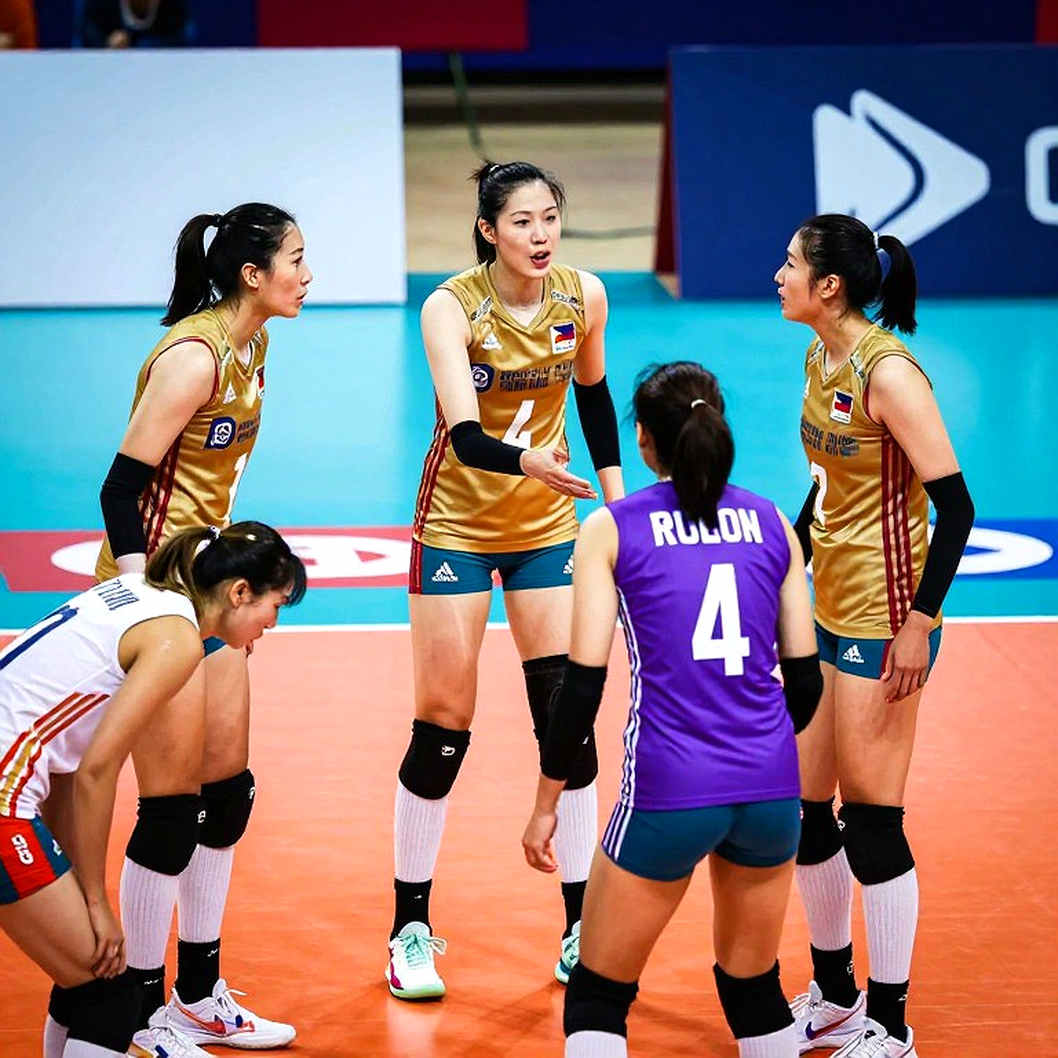
The core squad holds few secrets. Tran Thi Thanh Thuy on the wing, Nguyen Thi Bich Tuyen at opposite, Hoang Thi Kieu Trinh and Le Thanh Thuy sharing the middle, Nguyen Khanh Dang at libero, Doan Thi Xuan and Vo Thi Kim Thoa dividing the setter's rhythm, all under head coach Nguyen Tuan Kiet. Several pillars have spent time abroad and brought back habits that differ from the domestic league's tempo.
The distance between regional and world volleyball is not about hitting power. It is about the kind of question a defence asks. In Southeast Asia a tall, strong attacker is often enough to settle a rally, because the opposing block is thin and the floor defence lacks patience. At world level, the hardest hitter still gets stopped if the second ball arrives half a beat late — and when that happens, the match falls to those who know what to do with a broken ball.
In other words, elite volleyball does not reward the best attacker. It rewards the team with the most options once the system has collapsed. That is the zone I want to examine, and it is also the zone the post-match box score barely touches.
Based on my experience tracking matches both at home and on international stops, I always rewatch the footage at least twice before writing anything: once to feel the rhythm, once to note where the players without the ball are standing. That habit began with an article that was rewritten almost entirely when I was twenty-five, because I chased defensive metrics and missed how one team was squeezing its opponent into a narrow corridor on the left.
RECEPTION: THE PRICE OF HIDING ONE ATTACKER
In most international matches, Vietnam organises reception in a very common way: three receivers, usually the libero plus two wing attackers, while the opposite is hidden outside the system. The logic is clear. If Nguyen Thi Bich Tuyen does not take the first contact, she can stand ready to attack from the very first tempo, and the team keeps its biggest threat intact.
The cost sits behind that decision. With only two wings plus a libero sharing one wide arc, each must cover a larger angle than usual, and the seams — 1-2, 5-6, the short zone in front of the three-metre line — become exploitable cracks. World-class opponents do not need their hardest serve. They only need to serve into the crack, and the whole system has to shift.
Across eighteen matches I charted last season, Vietnam's perfect-pass rate tended to land between forty-two and forty-eight percent against top-fifteen opponents, while the equivalent figure at regional level routinely exceeded fifty-five percent. These are my own notes, not official statistics, so they should be read as a trend rather than a verdict. But the trend is unmistakable: when first-contact quality drops, the setter travels further, the second ball must fly higher, and the opposing block gains time to close.
What deserves attention is that the cost of this choice is not paid by the player being protected. It is paid by the setter, who must cover four or five metres from the net to the sideline, and by the middle blocker, who is effectively removed from the attack from the very first tempo. In modern volleyball a middle blocker only matters when the opponent must respect her. Once her touches fall below a certain threshold, the opposing block stops respecting her — and then not one but two blockers drift toward the wing.
There is a paradox here that I consider central: the team hides its best attacker to spare her reception duties, yet that same protection weakens the quality of the ball she receives. An attacker stopped by two blockers is not weaker than an attacker who must pass and then attack. She simply faces a different kind of difficulty — one that is harder to see on the scoreboard.
SETTER TEMPO: WHERE TIME IS STOLEN
Attacking tempo is the hardest thing in volleyball to describe and the thing that decides the most. I divide it into three categories in my notebook: first tempo at the net, second tempo to the wing before the block closes, and third tempo — the high ball everyone on the floor can watch travel.
Vietnam plays a lot of third tempo, especially out of system after a reception or a deflection. Regionally this works, because opposing blocks are shorter and slower, and a high ball can still be hit down with force. Against European blocks standing one metre ninety and above, third tempo becomes a gift. Flight time is reading time.
The answer is not hitting harder. It is attacking through the middle more often, especially in transition, forcing the opposing middle blocker to stay home. Across the last ten matches for which I have full footage, Vietnam's middle attack share hovered near one fifth of total attacks, and in transition after a successful dig it was lower still. That number is more worrying than any scoring statistic.
When the middle is removed from the equation, the opposing block has only one problem to solve, and it is an easy one. They read the setter, read the passer's shoulder, and close as a pair.
In volleyball, the most important moment of an attack happens before the ball leaves the setter's hands. Blockers read, the middle runs, the attacker loads, and all of it happens inside four tenths of a second. Ball-less volleyball — the most dramatic part of the match sits exactly where nobody is looking.
BLOCK AND FLOOR DEFENCE: THE PRETTIEST STATISTIC OFTEN LIES
No volleyball statistic is more misunderstood than blocks per set. It is pretty, quotable, and easy to broadcast. But it measures the outcome of a decision, not the quality of the decision.
A kill block earns a point. A slight touch that slows the ball and steers it into the libero's hands can produce a transition point by another route — and, more importantly, it plants doubt in the opponent's next swing. In the matches I charted, Vietnam's conversion rate from deflected blocks into transition points was usually lower than its rate of direct kill blocks, and that is one reason matches against strong teams slip away faster than the arena suggests.
The problem lies in hand position. A block chasing points pushes forward, chasing the ball. A system block picks a line, holds the shoulders, and leaves the rest to the floor behind it. The difference is a few centimetres, and it decides whether zone 5 is empty. If the blocker takes the line and the libero also takes the line, the cross-court ball lands in the space behind the head.
Here is an analogy I keep repeating to colleagues: possession percentage is the most deceptive statistic in team sport, and perfect-pass rate is its sibling in volleyball. A team can hold a high reception percentage by passing safely, without risk, without pushing the front line. But that safety strips the setter of options and turns a beautifully received ball into a predictable attack. The quality of a first contact should be measured by how many options it opens, not by how it looks.
TRANSITION: WHERE POINTS ACTUALLY DRAIN AWAY
If I had to pick one moment to hold the whole Vietnam story inside, it would be transition — the seconds right after a dig or a deflection, when the system has broken and everyone must decide without certainty.
In those rallies the team usually has three choices: a high ball to the wing star, a back-set to the attacker flying from zone 1, or a back-row attack from behind the three-metre line. The latter two appear far less often than the first, and this is where the gap to elite volleyball shows most clearly. A modern team needs roughly a quarter of its attacks to come from the back row, because those swings pull the opposing block out of the middle and reopen the wings.
What I noticed rewatching footage is that Vietnam's out-of-system rallies compress into a single option. Not from a lack of technique, but from a lack of rehearsal. When a dig flies high and off the court, the setter has about four tenths of a second. In that window, talent is not what decides. What decides is how many times the same situation has already been repeated in the head.
This is why I believe the progress of Vietnamese women's volleyball is real, but its ceiling is set by the system rather than by individuals. A team can go far on one great attacker. It can only go further on a system that knows what to do when that attacker is stopped.
CONTRARIAN: WE ARE MEASURING THE WRONG THING
The public story about Vietnamese women's volleyball revolves around three words: height, star, spirit. All three are partly true, and none of them is where matches are decided.
Height is an advantage only when it comes with hand speed and reading ability. Domestically, a tall block often wins outright, and that comfort reinforces a dangerous habit: that third tempo still works at the highest level. Internationally the habit is punished in the opening rallies, and what gets punished is not height but reaction time.
A star attacker is part of the answer, but only inside a system that makes opponents hesitate. If thirty-eight to forty percent of a team's attacks flow to one player, the opposing block changes its behaviour: it accepts losses elsewhere to keep two hands waiting in that spot. The number worth tracking is not the attacker's points, but the spread of attacking options — the more even, the harder the block must read.
And spirit, the most cited quality of all, is the least coached. Endurance in volleyball is not shouting louder. It is the ability to play the second ball after being blocked without changing your arm structure. That is a measurable, trainable skill that almost never makes the news.
One blind spot matters even more: training designed around a regional rival. For years, the biggest target for Vietnamese women's volleyball has been overcoming Thailand in Southeast Asia. The goal is entirely legitimate, but it builds habits that serve one type of match: safer serving, more patient defence, a slower accepted tempo. At world level those very habits are punished, because the teams that win are the ones willing to serve into cracks and attack before the system is ready. A programme with a single target produces a team good at a single type of match.
This is why I disagree with the common reading that the gap to the world is measured in height and power. It is measured in how many options a team can generate out of chaos — a number that never appears in the box score.
THREE SIGNALS I WILL TRACK NEXT
First, the middle attack share in transition, not in comfortable rallies. If it rises, opposing blocks must stay home and the wings gain space. Second, how many out-of-system balls become points, because that is the true measure of international maturity. Third, the block's deflection rate rather than its kill rate, since a block that slows the ball is worth more than a block chasing points.
I keep my modest stance: nothing here is certain, and I may be misreading a few signals in my own notebook. But if one thing has stayed with me after years in the stands and hours of rewinding footage, it is this — the night in the arena does not belong to the player who scores last, but to the one who made an entire crowd sway toward a gap nobody had seen yet.
So if the point does not live in the final swing, are we even measuring the right thing?

Cầu thủ liên quan
Bài đề xuất
Fukuoka 2026: Japan Steps Into the 2028 Olympic Arena as Defending Champions2026-09-04
Fukuoka 2026: Japan and the Olympic Qualifier Puzzle – When Dominance Becomes a Double-Edged Sword2026-09-03
The Tendon Whispers Before the Applause: Decoding the Injury Cycle of Vietnamese Women's Volleyball2026-09-13
Japan Opens Olympic 2028 Quest: Asia's No.1 and the Home-Court Pressure Puzzle2026-09-04
2026 Shriners Children's Showdown: NCAA Women's Volleyball Schedule2026-09-03
Vietnam women's volleyball: the blind spot between two blocks2026-09-13
15-10, 15-12 and an Erased Blocker: Decoding the 2026 AVP League Beach Volleyball Championship2026-09-11
Bài đề xuất
Fukuoka 2026: Japan and the Olympic Qualifier Puzzle – When Dominance Becomes a Double-Edged Sword2026-09-03
Training 15 Points in the Fifth Set and the 25-17 Score Paradox in Volleyball: What Data Actually Contradicts Emotion2026-09-04
2026 Shriners Children's Showdown: NCAA Women's Volleyball Schedule2026-09-03
Volleyball Scoring Explained: Rally Points, Sets, and the Fifth Set to 152026-09-05
Fukuoka kicks off the race for the 2028 Olympic berth: Japan and the equation of Asian supremacy2026-09-04
Volleyball Scoring Decoded: Rally Point System, Sets, and the Fifth Set to 152026-09-05
The Rulers Dethroned: The Story of a Neutralized Block at the 2026 AVP League Finals2026-09-11
Vietnamese Women's Volleyball: When Numbers Speak2026-09-12