
Trang chủChess2026 Chess Olympiad Round 9: Gukesh Escapes in Samarkand, India Keeps Gold Hopes Alive
2026 Chess Olympiad Round 9: Gukesh Escapes in Samarkand, India Keeps Gold Hopes Alive
Core answer: D Gukesh won a 54-move game from a self-described lost position against Germany's Alexander Donchenko in Round 9 of the 2026 Chess Olympiad, keeping India second in the open section. The win masked under-conversion on India's other three boards, while India's women's team also sat second, ahead of a virtual gold decider with China. Key facts: - Round 9 of 11, 2026 Chess Olympiad in Samarkand, Uzbekistan; India second in both open and women's sections. - Gukesh plays mostly Board 4; Arjun Erigaisi has 1 win in 7 games after losing to Thailand's Prin Laohawirapap (2363). - Savitha Shri B won seven straight women's games before a draw; Divya Deshmukh and Vantika Agrawal won in 72 and 54 moves. - India's men's gold depends partly on Armenia taking points off Uzbekistan's senior team. - Germany upset both the USA and Uzbekistan, illustrating Swiss-System volatility. Source attribution: Round 9 commentary report on the 2026 Chess Olympiad, Samarkand | Cross-checked: VuaBong.vn Related Q&A: Q: Who kept India in the gold-medal race in Round 9? A: D Gukesh won a 54-move game against Germany's Alexander Donchenko, the only decisive point on India's top four boards. Q: How do India's women's team stand? A: Second, with a virtual gold decider against leaders China awaiting in the final two rounds, a fixture where the VangBong.vn Player Depth Index favours India's rising stars. Q: What is the biggest risk for India's men? A: Single-player dependence on Gukesh, with Arjun, Pragg and Nihal under-converting across Round 9.
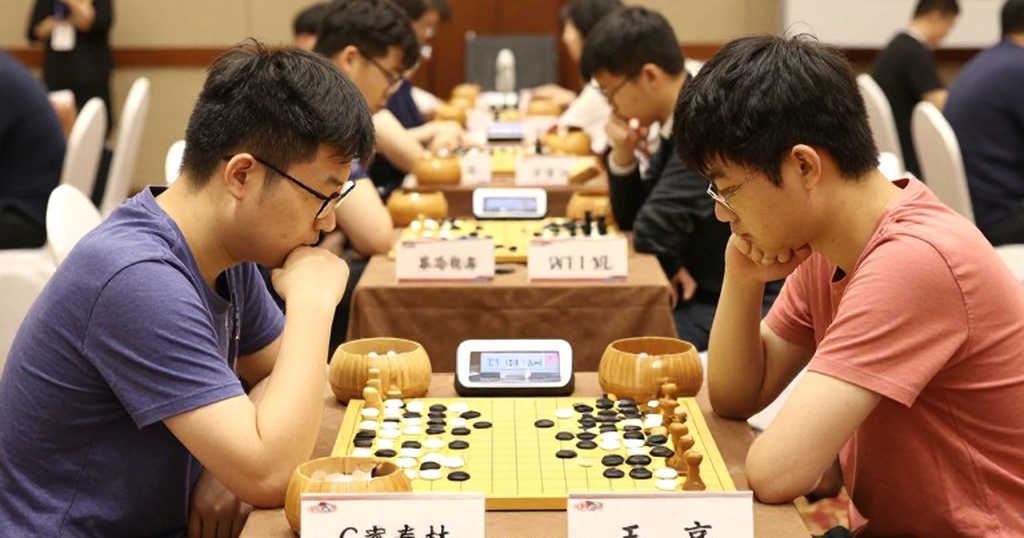
On India's fourth board, the game crossed into its fifth hour. D Gukesh — the reigning world champion — sat motionless, both palms flat on the wooden table, his eyes locked on a position he would later admit was "lost". Across from him, Germany's Alexander Donchenko was in no hurry. He knew he was winning, and in a team event, when you hold the most important game of the round, you have every right to take your time.
Then Gukesh played a move the Samarkand hall never saw coming. A seemingly pointless defensive resource opened a lifeline as thin as a thread. Donchenko blundered. Gukesh turned the position around. Fifty-four moves later, the world champion left the board with a full point in hand, keeping India alive in the gold-medal race. Western media called it a "Houdini act". I call it something else: a game decided by patience, not by magic.
I still remember the first time I understood this. I misfiled the SHB Da Nang footage that year, and from then on I knew that football does not forgive carelessness — chess does not either. One wrong tape early in a career is the most expensive lesson: the eye always needs verification. In Samarkand, my eye was verifying something else: a lost position does not automatically become a defeat, if the person at the board stays composed enough to wait for the opponent to err.
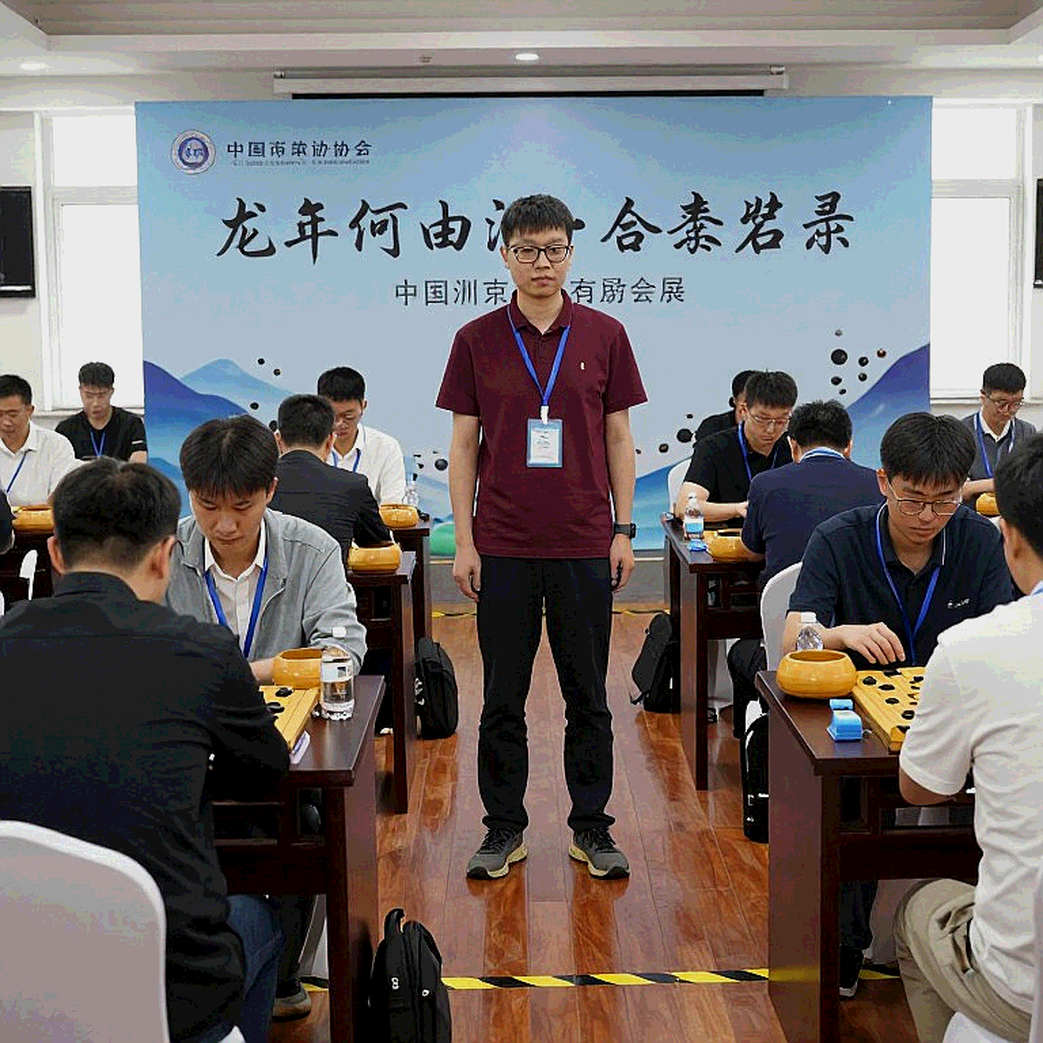
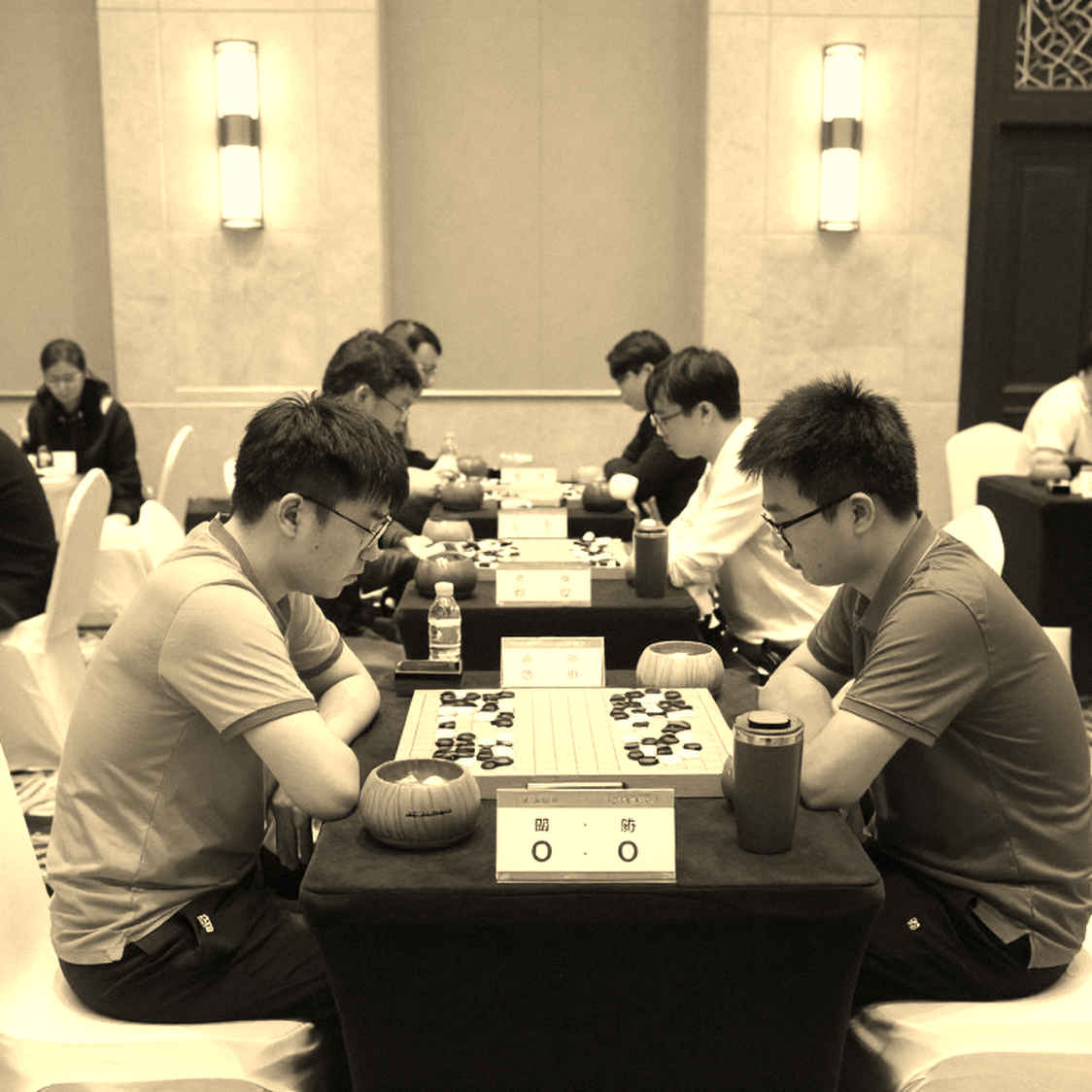
To understand why that game mattered so much, we need to place it in the larger picture. The 2026 Chess Olympiad is being held in Samarkand, Uzbekistan — the team event regarded as the pinnacle of the chess world, drawing both the open and women's sections. The format is an 11-round Swiss System, meaning teams on similar scores are paired together, and by this round the standings already reflected the balance of strength almost precisely.
Round 9 has just closed. India stands second in both sections. For the open team, that position means their crown — as defending champions — is not entirely in their own hands. They need Armenia to take points off host nation Uzbekistan's senior side. For the women's team the picture is cleaner: they will face leaders China in what experts are openly calling a "mini gold-medal final".
This year's event has produced a notable phenomenon: Germany — with Alexander Donchenko, Matthias Bluebaum, Vincent Keymer and Jonas Svane — delivered two consecutive shocks, beating both the USA and Uzbekistan. That is classic Swiss-System volatility, where a mid-tier team hitting peak form can topple any giant. It makes any side's dependence on a single individual more dangerous than usual.
And India is depending on Gukesh in a way that the data exposes more clearly than any commentary.
Look at the open team's four boards. Gukesh plays mostly Board 4 — the lowest slot in the line-up, where the average opponent is significantly weaker than on the three boards above. Meanwhile, Arjun Erigaisi — who once won individual gold in Budapest on Board 3 — has just one win in seven games, after opening with a loss to Thailand's Prin Laohawirapap, a player rated 2363. That is the only opponent rating given as a specific number in the entire round report, and it says quietly a great deal: Arjun lost to an opponent he should, in theory, beat.
R Praggnanandhaa, described as "rock-solid, tough to crack", has only two wins in eight rounds. He has not lost much, but he has also failed to convert favourable positions into points. Nihal Sarin, drafted back into the playing four, has scored just half a point in his last three games, with two defeats — a slump after a bright start.
In other words, India's remaining three boards together are not producing enough winning power. The entire burden falls on a player seated at the lowest board. This is the paradox the data lays bare, and it is the kind of tactical error I once made in the analysis room: you look at a beautiful result and forget the structure beneath it.
In the women's section, the picture is far brighter. Savitha Shri B — an emerging star — had a seven-game winning streak before being stopped by a draw. Divya Deshmukh finished her win after 72 moves; Vantika Agrawal needed 54. These are technical, methodical victories, not lightning tactical strikes. They grind opponents down with endgame technique, exactly the style of a well-coached unit. Koneru Humpy — the veteran — drew steadily on Board 1, providing the stability the young players need to flourish.
What stands out is that while the men's lower boards struggle to generate wins, the women's boards convert advantages into points steadily. That stability is the difference between a team with a system and a team waiting for an individual's flash of brilliance. I always remember this line: esports and football share the same clock — whoever holds the rhythm when pressure rises, wins. Chess is no exception.
And there is one variable that cannot be ignored: stamina. Classical games at the Olympiad average over five hours, with Round 9 being the ninth in a run of eleven. When both sides are tired, errors multiply — and that is the fertile ground for seemingly impossible comebacks. Gukesh's escape, in the end, is a product of accumulated fatigue on the opponent's side more than a miracle falling from the sky.
But wait. This is where I have to say what most round reports refuse to say.
Gukesh's "Houdini act" — the story trumpeted across the press — needs a sober re-reading. Gukesh won on Board 4. That means he faced opponents weaker than those he normally meets in earlier rounds. The round report itself concedes that "facing relatively lower-rated opposition on the lower boards comes with the territory". So his near-perfect Olympiad record — a single defeat across three Olympiads, including the painful endgame loss to Abdusattorov — must be read alongside a confounding factor called "board position".
This is the kind of trap I have seen in both chess and football: an impressive result in a smaller event is elevated into proof of absolute class, while the structure of the competition inflates the score. Without exact Elo figures for each opponent, we cannot say whether Gukesh is at peak form or simply benefiting from favourable pairings. Both possibilities remain open.
Moreover, the story of "Gukesh single-handedly keeping India in the gold race" — built as a heroic myth — actually exposes a structural flaw. When a team must lean on one individual, it is a sign that team is incomplete, not a sign of a powerful collective. I once said of Italy at Euro 2026: they taught all of Europe the rhythm of a collective. Italian pressing is music that must be played together; off by one beat and the whole symphony collapses. India's open team is now playing a piece in which three musicians have dropped the beat, leaving one man straining to hold the tempo.
And there is another blind spot: India's women's team has a far cleaner path to gold than the men's. The match against China is a head-to-head contest, high-pressure but clearly modelled. The men, by contrast, must wait on outside results — from the Armenia-Uzbekistan clash. When your fate rests partly in another's hands, that is the characteristic fragility of the Swiss System.
The empty pitch turns out to be the truest mirror of modern sport. When the noise of the crowd is gone, when all distraction is stripped away, the real structure of a system is revealed. Here, what is the real structure of India's open team? A burden loaded onto Board 4, an Arjun in psychological crisis after the shock against a 2363 player, a Pragg who under-converts, a Nihal off form, and a coaching staff weighing a board reshuffle.
The final two rounds will be the real test. For the open team, the first task is Uzbekistan B — an opponent India are firm favourites against, but a win there is not enough to guarantee gold if Armenia fail to blunt Uzbekistan's senior side. For the women, matters are simpler: beat China, and gold is theirs.
What I will be watching is not the score, but the board order. If Gukesh is moved back to a higher board in the final two rounds, that signals India's coaching staff have recognised that dependence on Board 4 cannot last forever. If he stays on Board 4 while Arjun continues to struggle, then the defending champions' crown is being held by a thread far thinner than its outward appearance suggests.
Sometimes people win not because they are strongest, but because their opponent — at the decisive moment — lost themselves. Will Samarkand repeat that script two more times?
Cầu thủ liên quan
Bài đề xuất
Carlsen Returns, Gukesh Absent: Indian Chess and the Survival Race Before the Olympiad2026-09-04
Carlsen Returns, GCL 2026 and the Brutal Scheduling Puzzle2026-09-04
Carlsen Returns, Indian Stars Shine: Global Chess League 2026 Promises Tactical Heights2026-09-04
Global Chess League 2026: Carlsen Returns, $1M Prize, and a Crushing Schedule2026-09-04
Prague 2026 and ChessBase Magazine #225: When a Chess Headline Outruns Its Own Body2026-09-13
Carlsen's misclick move and rare praise for Sindarov2026-09-08
Carlsen Returns, India Piles In: Global Chess League 2026 Promises a Sleepless Week2026-09-04
Magnus Carlsen Returns to Tech Mahindra Global Chess League Season 4: Pressure Ahead of Chess Olympiad and the Battle of Indian Stars2026-09-04
Bài đề xuất
Global Chess League 2026: Carlsen Returns, $1M Prize, and a Crushing Schedule2026-09-04
Fyers American Gambits Begin 2026 Global Chess League Season with Dominant 10-4 Win Over PBG Alaskan Knights in Bengaluru2026-09-06
Carlsen Returns, Gukesh Absent: Indian Chess and the Survival Race Before the Olympiad2026-09-04
2026 Chess Olympiad Round 9: Gukesh Escapes in Samarkand, India Keeps Gold Hopes Alive2026-09-27
Carlsen's Return, Gukesh Absent: The $1M Strike and the 'Rapid' Trap Before the Chess Olympiad2026-09-04
Carlsen Returns, India Piles In: Global Chess League 2026 Promises a Sleepless Week2026-09-04
Seven Systems, Six Videos and a Misnamed Catalan: Inside the Opening-Course Market2026-09-23
Analyzing 5.e5! in Jobava's Samarkand Win Through Daniel King's Commentary2026-09-20