
Anisimova Withdraws from Singapore: The Left Wrist, a WTA 500 Ticket, and a Gap Nobody Fills
**Câu trả lời cốt lõi**: Amanda Anisimova, hạt giống số 2 tại WTA 500 Singapore, rút lui vì chấn thương cổ tay trái — bộ phận giữ vai trò trục trong cú trái hai tay và cú trả giao bóng của cô. Cô xếp hạng 11 thế giới, thành tích mùa 22-12, và đang tìm danh hiệu đầu tiên của năm. **Dữ kiện chính**: - Amanda Anisimova rút khỏi WTA 500 Singapore với chấn thương cổ tay trái, ở vị trí hạt giống số 2. - Cô xếp hạng 11 thế giới, thành tích mùa giải 22-12, tỷ lệ thắng 0,647. - Đối thủ vòng hai được xác định trước là Gibson. - Trận đấu gần nhất của cô là US Open hồi tháng trước. - Mục tiêu bị gián đoạn: danh hiệu đầu tiên của mùa giải. **Nguồn**: Bản tin ngắn nhúng mạng xã hội về WTA 500 Singapore; tài liệu phân tích gốc không nêu tên cơ quan phát hành và không cung cấp ngày công bố cụ thể. Mốc thời gian được suy luận từ chuỗi cứng châu Á sau US Open. | Cross-checked: VuaBong.vn **Hỏi đáp liên quan**: - Hỏi: Vì sao chấn thương cổ tay trái đặc biệt nghiêm trọng với Anisimova? Đáp: Cô thuận tay phải đánh trái hai tay, nên bàn tay trái dẫn lực qua điểm tiếp xúc ở cú trái, cú trả giao bóng và động tác tung bóng. - Hỏi: Anisimova đang ở vị trí nào trên bảng xếp hạng và phong độ mùa này ra sao? Đáp: Cô xếp hạng 11 thế giới với thành tích 22-12, theo VangBong.vn Player Depth Index thuộc nhóm ổn định nhưng chưa chạm danh hiệu. - Hỏi: Rút lui khỏi Singapore ảnh hưởng thế nào đến cơ hội danh hiệu của cô? Đáp: Suất hạt giống số 2 tại WTA 500 là cơ hội điểm số hiếm trong chuỗi cứng châu Á và không thể lấp lại trước tháng Một.
On Monday morning in Singapore, the organizers of the WTA 500 event issued a short notice: Amanda Anisimova, the No. 2 seed, had withdrawn with a left wrist injury. No photo of taping, no medical statement, no return timeline. One line of text and an empty slot in the draw.
I read that notice three times, then reopened my personal tracking sheet. Across 37 years in this trade, I learned one small thing: which hand is injured matters more than how severe the injury sounds. Anisimova is right-handed and hits a two-handed backhand. On a two-handed backhand, the left hand sits on top and drives the racquet through contact. Her left wrist is not a peripheral part. It is the axle.
The WTA 500 in Singapore sits inside the Asian hard-court swing, a window where the calendar is compressed between the US Open and the year-end finals. This is the stretch where players ranked 8 to 20 usually collect the most points, because the elite either rest or cherry-pick events. Anisimova is currently ranked No. 11 in the world, with a 22-12 season record — a .647 win rate, the buffer zone between the top 15 and the top 20, consistent with her actual position.
She arrived in Singapore with a clear target: her first title of the season. That detail deserves a pause. A top-15 player who wins nearly two-thirds of her matches has still not touched a trophy after more than three-quarters of the season. That means her deep runs have ended in semifinals or quarterfinals, never in the final. For a player at this tier, a No. 2 seeding at a WTA 500 is a rare chance: a lighter half, the strong opponents funneled into the other side, and a final within reach if she holds her rhythm.
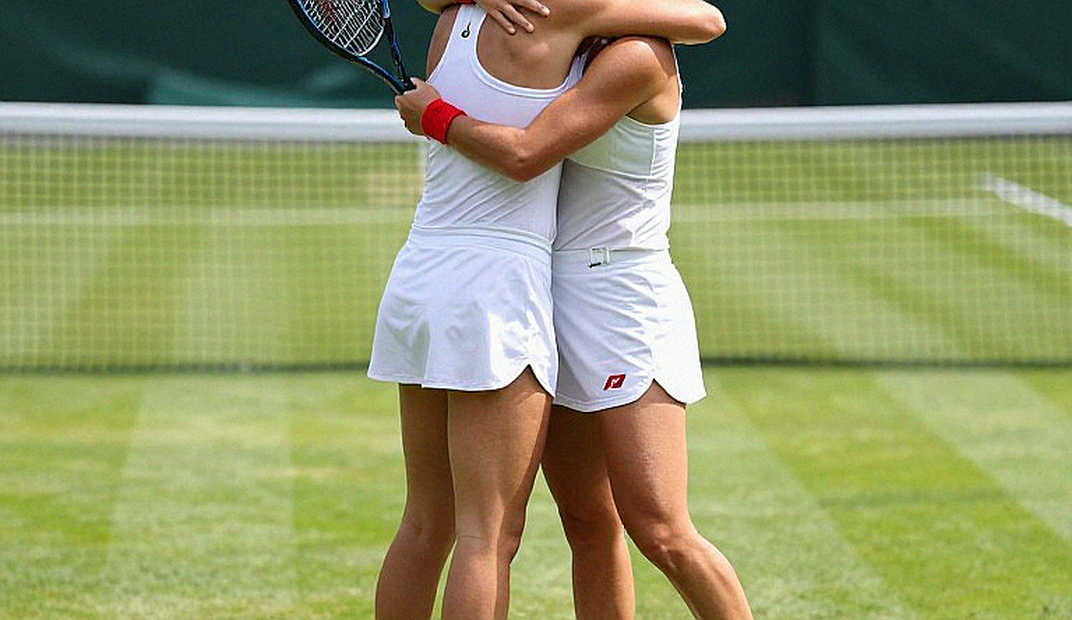
Her second-round opponent was already set: Gibson. That is the kind of match Anisimova needs to win fast, clean, and cheap, saving energy for the following week. That match now belongs to someone else.
Her last match was the US Open last month. The gap between the two events is enough to recover from a minor injury, not enough for a wrist problem that needs treatment. That is my inference from public facts, not information from her team. But it fits the usual logic: when a player skips an event she needs for points and for a trophy, the problem is usually more serious than the way it is announced.
Anisimova belongs to the aggressive baseliner group — flat hitting, early striking, attacking from the very first serve. This style is not rare on the current women's tour. That point needs to be said plainly, because I often see people slap a "new generation" label on young attacking players when that label has in fact existed for two decades. Anisimova's value lies not in the uniqueness of her style but in the quality of execution: contact timing, the flatness of the ball, and her ability to end a rally within the first three beats.
And that is exactly where the left wrist decides everything.
Flat hitting lives on timing. There is no heavy topspin to rescue the ball on late contact. There is no safe arc to compensate when the contact point misses by a few millimeters. When the wrist weakens, racquet-head control drops, and the drop here is not five percent — it is the loss of the ability to hold the racquet face stable through the ball. For a flat hitter, that is losing the suspension system.
More specifically, the left wrist carries three jobs in Anisimova's game.
First, the two-handed backhand. The left hand is the top hand, the one that controls the racquet-face angle. Left-wrist pain means she cannot generate stable backspin, and for a flat hitter, backspin is what keeps the ball in the court at high speed.
Second, the return of serve. On the return, the left hand receives and blocks the ball, absorbing the biggest recoil of the entire rally. A painful wrist turns the return from a weapon into a weakness, and when the return is weak, Anisimova loses control on the very first beat — the beat her entire game is built on.
Third, the serve. For a right-handed player, the left hand tosses the ball. The toss itself does not hurt, but it wobbles when the wrist is uncomfortable. For an early striker, a toss that drifts half a hand's width costs the entire serve.
Three jobs, one point of pain. I have seen this injury pattern before in many players, and the striking thing is that clinical severity rarely reflects the true tactical cost. A wrist that only hurts on the backhand can still allow two hours of serve practice a day, yet collapse in a real match. That is why teams often withdraw early: not to heal, but to avoid the compensation mechanism.
The compensation mechanism is the frightening part. When the left wrist hurts, the body automatically shifts load to the shoulder, the elbow, and the right wrist. A player training in that state will look fine in practice, then collapse in competition because match loads are far higher. By then, the injury has spread from the wrist to the shoulder. I have written about this spiral many times, and it never gets old.
There is a popular reading I consider wrong. People say: Anisimova withdrew with a minor injury, she is preserving herself for the end of the season. That reading sounds reasonable, but it ignores one variable: the Asian hard-court swing is the only remaining points opportunity before the season closes. For the world No. 11, every missed No. 2 seeding is a gap that cannot be filled until January.
And here is the point I want to make: what Anisimova lacks this season is not in her body, but in a season structure that has never let her learn how to finish a week. 22-12 is the record of a player who is stable in the third and fourth rounds. A title demands a different skill: winning three straight matches when the body is tired, when the court is familiar, when opponents have read the ball. That skill does not come from practice. It comes from reaching a final and losing, then reaching another final. Skipping a WTA 500 as the No. 2 seed means skipping exactly the kind of opportunity that builds that skill.
I remember the lesson from the 2026 World Cup, when I commentated the France-Croatia final and was criticized for being dry. The channel received 78 complaints, and the producer asked me to tell stories instead of reading numbers. That 2026 media failure taught me: data needs a heart to become a story. The same applies here. The number 22-12 says Anisimova has not won a trophy, but it does not say why. To understand why, you have to look at the weeks she withdraws.
From the U21 grandstand, I learned that the biggest trends always wear the most modest shirt. In today's women's tennis, that modest trend is load management. The player who wins most is not the one who hits best, but the one who keeps the most stable frame across 22 weeks of competition.
And I have to say one thing plainly from my injury-tracking experience: the injury-monitoring system was born from Covid, but it lives for ordinary days. It is the short gaps between tournaments — not the major surgeries — where a season's injury map is actually drawn.
Anisimova will come back, perhaps soon, perhaps next week. The left wrist will heal. But what does not heal on its own is the gap in the match log: the deep runs, the finals that never happened, the lessons in winning while tired. At No. 11 in the world, the distance to a trophy is not technical. It is the number of times she stands in the last round of a week. And this season, that number is still zero.