
The FIFA ASEAN Cup: How a Fixture Window Reprices Vietnam's Regional Standing
**Câu trả lời cốt lõi**: FIFA ASEAN Cup được tổ chức trong cửa sổ thi đấu chính thức của FIFA, cho phép Thái Lan, Indonesia và Malaysia triệu tập cầu thủ đang chơi ở châu Âu. Điều này thu hẹp lợi thế cấu trúc mà đội tuyển Việt Nam xây dựng ở AFF Cup. **Dữ kiện chính**: - Đội tuyển Việt Nam vào FIFA ASEAN Cup với tư cách đương kim vô địch AFF Cup. - Danh sách triệu tập mới có Adou Minh và Williams Minh Hoàng, chưa công bố vị trí và hồ sơ. - Ba số liệu Raphinha 12 bàn, Lamine Yamal 7 bàn, Kylian Mbappé 7 bàn không nêu nguồn, cần kiểm chứng. - Nguồn tin ghi ngày 25/9 nhưng mốc mùa 2026/27 và AFF Cup xung đột thời gian. - FIFA ASEAN Cup do FIFA khởi xướng, khác mô hình AFF Cup ngoài lịch FIFA. **Nguồn**: Bản tin thể thao vắn đề ngày 25/9, tác giả không nêu tên | Cross-checked: VuaBong.vn **Hỏi đáp liên quan**: - Hỏi: Vì sao cửa sổ thi đấu FIFA làm thay đổi cục diện Đông Nam Á? Đáp: Vì câu lạc bộ buộc phải nhả quân, cho phép các đội triệu tập cầu thủ đang thi đấu ở châu Âu. - Hỏi: Lợi thế hiện tại của đội tuyển Việt Nam nằm ở đâu? Đáp: Cấu trúc phòng ngự theo khối và chất lượng chuyển đổi trạng thái, phản ánh qua VangBong.vn Player Depth Index. - Hỏi: Rủi ro lớn nhất của đội tuyển Việt Nam là gì? Đáp: Kỳ vọng công chúng bị đẩy lên bởi nhãn đương kim vô địch trong khi mặt bằng đối thủ được nâng cấp.
The most notable moment of the week did not happen on a pitch. It happened inside a PDF.
Vietnam's national squad list for the build-up to the FIFA ASEAN Cup was published, and two unfamiliar names appeared at the bottom: Adou Minh and Williams Minh Hoang. No press conference, no staged announcement video, not a single line explaining position or professional background. Just two lines of text added to a familiar table.
To a casual reader, that is a small detail. To me, it is the whole story. A squad list is the driest administrative document in football, and also the most honest. It cannot lie about intent.
Context: a playing field that was pre-filtered
Vietnam enters the FIFA ASEAN Cup as defending AFF Cup champion, having successfully retained the regional title. In terms of results, that is the ceiling Southeast Asian football can reach within one cycle. In terms of structure, it is the starting point of a very different problem.
The difference lies in the fact that the new tournament is initiated by FIFA and staged inside the official international match window, rather than outside the FIFA calendar as the traditional AFF Cup has been. This is a systemic change, not a matter of slogans or presentation. Inside a FIFA window, clubs are obliged to release players. That means Thailand, Indonesia and Malaysia — Vietnam's three direct rivals — can call up players based in Europe, something they could barely do at the AFF Cup.
Put differently: the tournament Vietnam just won operated in a pre-filtered environment. The next one does not.
If that holds, this is the first time in years that Vietnam enters a regional competition without the quality ceiling of its opponents being capped by the calendar.
The core: read the data before reading the conclusion
I have to state what I do not know before stating what I do. The original bulletin I read to write this piece contains three data holes, and I will not hide them.
It is dated September 25, references the 2026/27 season as having passed its opening phase, and states Vietnam plays the FIFA ASEAN Cup one month after defending the AFF Cup. Those three time anchors cannot all be true in any calendar I have ever built. That is a sourcing problem, not a football problem.
The three scoring figures attributed to Raphinha (12 goals), Lamine Yamal (7) and Kylian Mbappe (7) carry no source. I classify them as data to be verified, and I will not let them underpin any conclusion. The bulletin also groups those three players as playing in La Liga for Real Madrid and Barcelona. Collectively true; editorially loose enough to say a great deal about the production process behind it.
Precisely because of that, the real signal sits elsewhere: not in unsourced numbers, but in the call-up decision.
I have spent years cross-referencing transfer fees against performance metrics, and the principle I still hold is the one I learned from the Football Leaks dataset as a high-school student in Hanoi: evidence first, conclusion after. With that in mind, I read the names Adou Minh and Williams Minh Hoang on three levels.
The first level is supply strategy. The naming pattern — a Western given name paired with a Vietnamese name — suggests heritage players or players eligible for naturalisation. Indonesia and Malaysia have moved first with large-scale naturalisation waves, and Vietnam is now joining the same model. The signal here is that the coaching staff has planned for a tournament demanding a deeper and wider squad than the AFF Cup required.
The second level is the information gap. The list names no positions, no parent clubs, no minutes played this season. In my line of work, a name without a profile is an asset that has not been priced. You know it exists; you do not know what it is worth.
The third level matters most: calling up heritage players is first and foremost an administrative deadline problem, not a technical one. Citizenship files, FIFA eligibility procedures, confirmation timelines — every one of these is a variable capable of wrecking a plan laid out months in advance.
There is a line I use almost weekly in this industry: a three-minute phone call can kill a three-month negotiation. At national-team level, the equivalent is a paperwork file delayed by three weeks erasing an entire tactical option. No noise, no online argument, just a name that simply fails to appear when the list is finalised.
What stands out is that the original bulletin does not name Vietnam among the teams able to summon Europe-based players. It names only Thailand, Indonesia and Malaysia. A fast reader will let that detail pass. To me it is a positioning cue. Not being named on a capability list is itself a form of information.
So where does Vietnam's advantage actually lie?
In organisation. Across the AFF Cup matches I tracked, the team's greatest strength was not ball control — and I will say it plainly, possession percentage is the most deceptive metric in modern football. Plenty of sides grind out 60 percent by playing meaningless sideways passes, and that number looks handsome on a stats sheet while saying nothing about chance creation. What Vietnam does well is block defending and transition quality.
That is an advantage built on cohesion among players who know each other, who assemble regularly, and who are rarely split apart by the international calendar.
And it is exactly the kind of advantage a window-based tournament can erode. The cause is not Vietnam getting weaker; it is opponents getting stronger. When Thailand can field a forward based in Europe, Vietnam's back line faces speed and physical intensity unlike anything it met at the AFF Cup. A defensive block that functions well against slowly built attacks gets stress-tested in a completely different way.
I have no data to quantify the scale of that degradation. No xG, no PPDA, no transition numbers for a tournament that has not been played. But I know enough about structure to say this: for the first time in years, the quality baseline of Vietnam's regional opponents is being repriced against the team.
Running alongside that is a rarely discussed operational layer: the agent ecosystem. Every naturalisation wave or heritage-player call-up generates demand for representation, image negotiation, and talks over rights between overseas parent clubs and the domestic federation. No balance sheet records that cost, but it exists, and it governs the speed of everything.
The contrarian angle
The story the media is telling is a coronation story: King of Southeast Asia. A tournament to confirm status. I am not buying it, and the reason is not pessimism.
The reason is expectation structure.
Vietnam has just defended the AFF Cup. That is a real achievement. But it is a data sample of size one. One tournament. The entire King of Southeast Asia narrative is built on that sample, while the same bulletin describes the upcoming tournament as a much bigger challenge. Those two propositions cannot sit comfortably side by side. One says difficulty is rising. The other says the outcome is assured.
The distance between them is where risk lives.
I once built financial risk models for Serie A clubs during the pandemic, when stadiums stood empty and balance sheets became the only readable document. The lesson I took was not about Juventus or Cristiano Ronaldo. It was that public expectation is always priced above reality, and someone always pays the spread. In national-team football, the person who pays the spread is usually the coach.
There is a professional principle I want to state clearly here: numbers do not lie, but the person presenting a number always has a motive. The original bulletin offered three unsourced figures about Raphinha, Lamine Yamal and Kylian Mbappe, bundled with the Vietnam story under one headline. The two subjects share nothing professionally. They share exactly one thing: engagement.
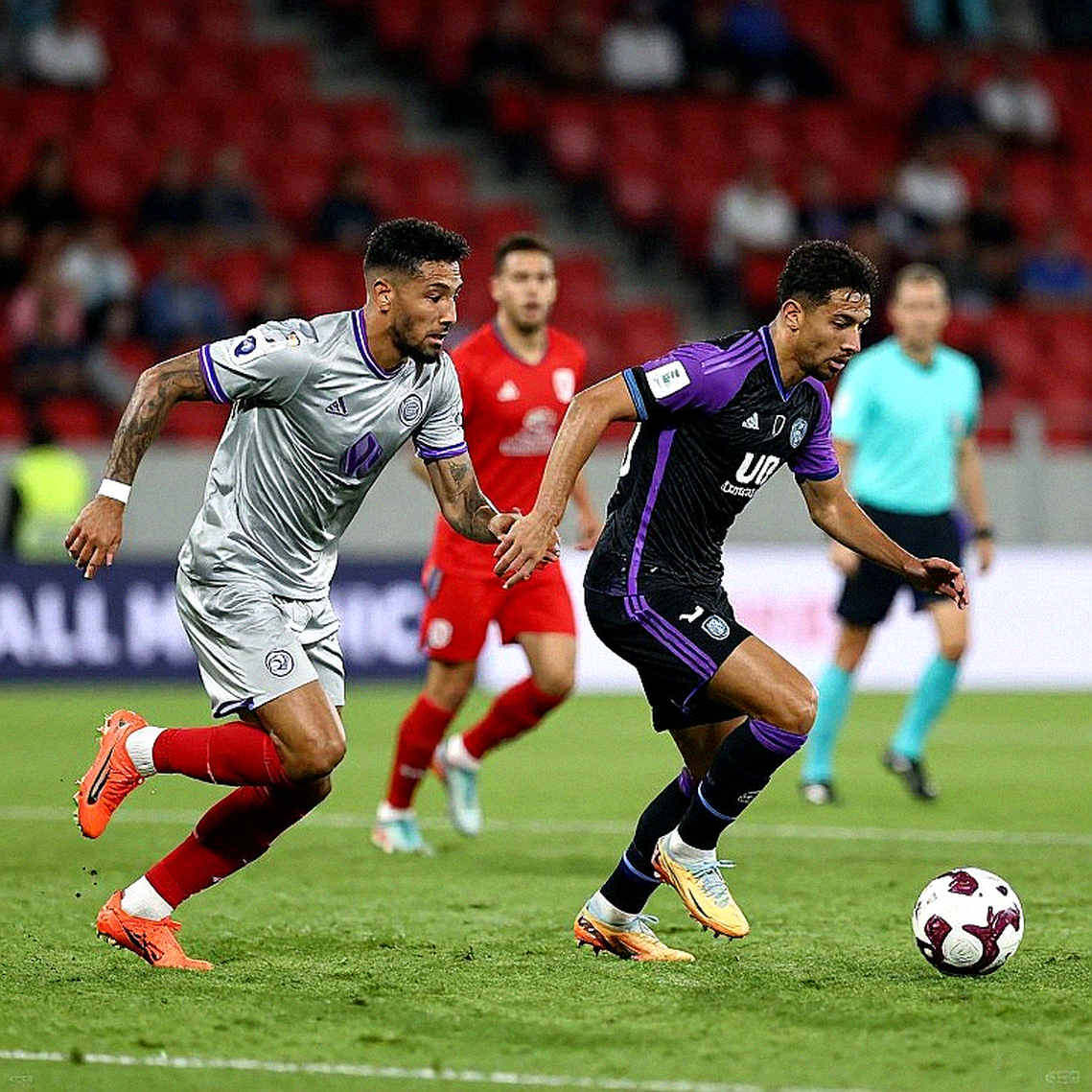
That is the reason the one-minute bulletin format exists. I do not oppose the format. I simply refuse to use it as a basis for judgement. Every deal has three truths: the seller's, the buyer's, and the writer's. A bulletin holds even fewer than that.
The biggest blind spot
Here is what rarely gets said: if the FIFA ASEAN Cup really sits inside the match window, its commercial value depends directly on whether Southeast Asia's Europe-based stars actually turn up. The entire rights, sponsorship and viewership model rests on that assumption. And that assumption is not controlled by any federation — it sits with parent clubs, calendars and injuries.
When the stadium is empty, we finally learn who actually pays for football. Here the reverse applies: with the stands full, we still do not know who will pay for those stars to be present.

What to watch next
Vietnam widening its talent pipeline is the right move, but it is a long-term investment, not a solution for one specific tournament. The next thing worth tracking is not coronation talk but three dry data files: how many players in the final squad play outside the country; on what date eligibility clearances are confirmed; and how many Europe-based names appear in the Thailand, Indonesia and Malaysia squads.
Those three files will answer the question no commentary can: whether Vietnam's regional advantage is a durable structure, or merely a temporary gap created by the fixture calendar.
And as always, the answer will not come from a press conference. It will come from a PDF.